880 Seven Hills Drive, Suite 130, Henderson, NV 89052
Do You Know the Evolution of Toothbrushes?
Aspire Dental | October 25, 2022
You brush your teeth two or three times a day. But while you’re cleaning up those pearly whites, have you ever wondered about the evolution of the tools? No? OK, then it’s time for you to find out.
The office of Aspire Dental is enthusiastic about treating your oral health. In addition to our high-quality, comprehensive care, we also boast a welcoming, patient-focused environment in which each client will feel at ease. We are an excellent one-stop solution for the oral healthcare needs of your whole family.
The toothbrush is one of the most essential tools in our daily routine, yet its evolution over thousands of years is nothing short of fascinating. The journey from primitive tooth-cleaning methods to the modern, sophisticated toothbrushes we use today reflects both human ingenuity and the ongoing quest for better oral hygiene.
Ancient Beginnings: Twigs and Bones
The earliest evidence of tools used for dental care dates back to around 3000 BC. Ancient civilizations like the Babylonians and Egyptians were among the first to fashion rudimentary toothbrushes by fraying the ends of twigs. These “chew sticks,” as they were called, were often aromatic branches like the Salvadora persica, which had natural antiseptic properties. This simple yet effective method laid the groundwork for the future of oral care.
In the 15th century, the Chinese took dental hygiene to the next level by creating a more sophisticated version of the toothbrush. They crafted handles from bamboo or bone and attached stiff bristles made from the coarse hairs found on the back of pigs’ necks. This design was eventually adopted in Europe, where people preferred the softer feel of horsehair bristles. Some even experimented with feathers for a more delicate touch.
The 18th and 19th Centuries: Industrial Advancements
The toothbrush as we know it today began to take shape in the 18th century. In 1780, William Addis of England revolutionized the toothbrush by introducing a handle made of cattle bone, to which he attached bristles using wires. This marked the first time toothbrushes were mass-produced, making them accessible to a broader audience.
Fast forward to 1844, and the first three-row bristle toothbrush was introduced. This innovation provided a more thorough cleaning experience and set the standard for modern toothbrush design. By the late 19th century, the toothbrush had become a household item in many parts of the world, although bristles were still typically made from animal hair, which was prone to harboring bacteria and wear down quickly.
The 20th Century: Enter Nylon and Electricity
The real breakthrough in toothbrush design came in 1938 when DuPont, an American chemical company, introduced nylon bristles. Unlike natural animal hair, nylon was more durable, hygienic, and less abrasive on the gums. This innovation not only improved the effectiveness of toothbrushes but also made them more affordable and accessible to the general public.
The next major milestone came in 1959, when E. R. Squibb and Sons Pharmaceuticals introduced the Broxo electric toothbrush, later known as the Broxodent, to the U.S. market. This invention represented a significant leap forward in dental care, offering a new level of convenience and efficiency. Electric toothbrushes quickly gained popularity, and over the years, they have continued to evolve with added features like timers, pressure sensors, and multiple brushing modes.
The 21st Century: Advanced Technology for Oral Care
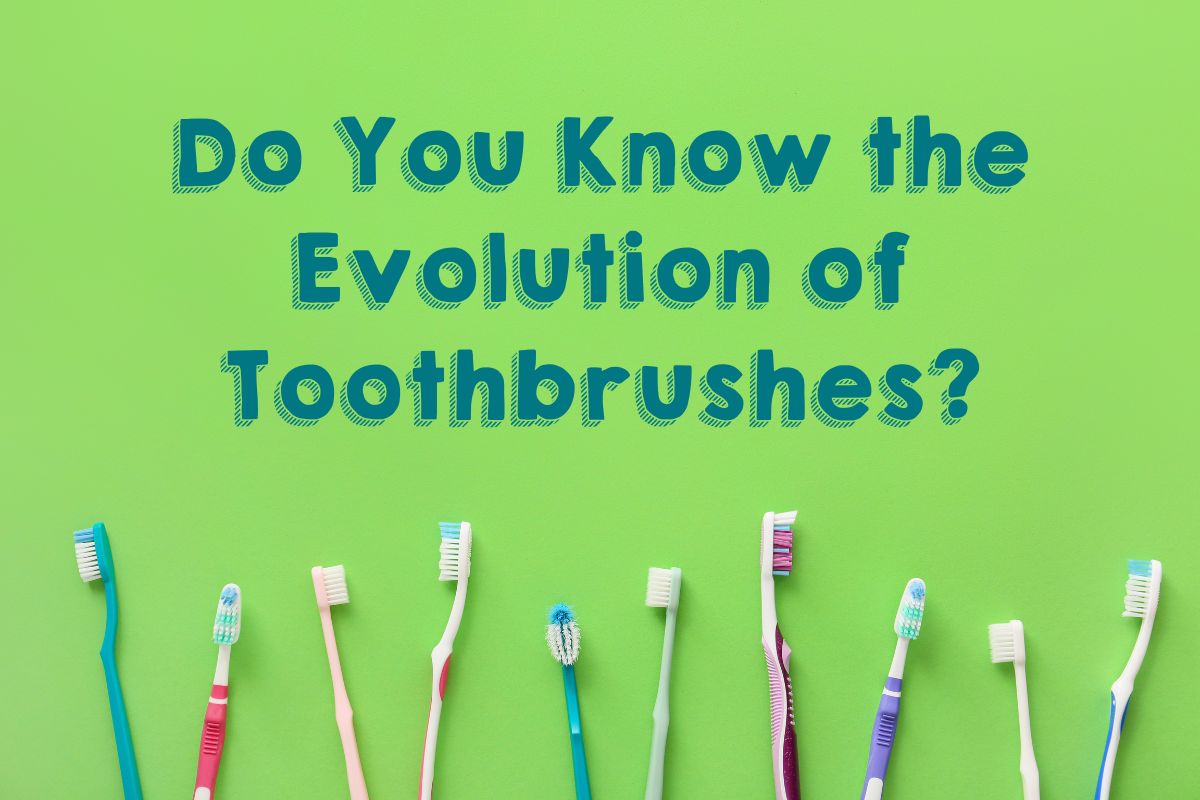
Today, toothbrushes have reached new heights of sophistication. Manual toothbrushes are available in various sizes and shapes, with features designed to cater to individual needs. You can find toothbrushes with curved, angled, or straight handles, making them easier to grip and maneuver. The bristles come in different levels of firmness, from ultra-soft to hard, and the heads are available in rectangular, oval, and even diamond shapes to fit the contours of your teeth.
Powered toothbrushes have also seen significant advancements. Basic models are affordable and effective, while high-end versions come equipped with cutting-edge technology. Some electric toothbrushes feature oscillating and rotating heads that clean teeth more thoroughly than manual brushing can achieve. Sonic toothbrushes, which vibrate at speeds 10 times faster than regular electric toothbrushes, are a prime example of how far we’ve come in our pursuit of optimal oral hygiene.
Conclusion: A Journey of Innovation
The evolution of the toothbrush is a testament to human creativity and the ongoing commitment to improving health and well-being. From the simple twigs used by ancient civilizations to the high-tech brushes of today, the journey has been one of constant innovation. As we continue to learn more about oral health, we can only expect the tools we use to evolve further.
The office of Aspire Dental has a well-established reputation for providing excellent care and compassionate service. New patients are always welcome to our state-of-the-art facility, your resource for the best in modern dentistry. Please call us to schedule an appointment.