
880 Seven Hills Drive, Suite 130, Henderson, NV 89052
How to Get Yellow Out of Invisalign Aligners

Aspire Dental | April 18, 2025
Invisalign aligners are designed to be discreet, but yellow or cloudy trays can make them much more noticeable. Because you wear your aligners for most of the day, they can collect saliva, plaque, food particles, and residue from drinks. The good news is that proper cleaning and a few simple daily habits can help keep your aligners clear throughout treatment.
Why Do Invisalign Aligners Turn Yellow?
Yellowing can happen when substances accumulate on the surface of your aligners. Food particles and bacteria can build up when trays are not cleaned regularly, while certain drinks can leave behind stains. Coffee, tea, red wine, and dark-colored beverages can contribute to discoloration, especially if you drink them while wearing your aligners. Smoking or tobacco use can also cause noticeable staining.
Sometimes, what looks like yellowing may actually be a combination of plaque buildup and trapped residue. Regular cleaning can help prevent this buildup and keep your aligners looking clearer.
How Do You Get the Yellow Out of Invisalign?
If your Invisalign aligners have started looking yellow, consistent cleaning is the first step. Try these habits as part of your daily routine:
Rinse Your Aligners Regularly
Whenever you remove your aligners to eat or drink, rinse them with lukewarm water before putting them back in. Rinsing helps remove saliva and loose debris before they remain on the trays for an extended period. Avoid hot water because excessive heat can affect the shape and fit of the aligners.
Clean Your Aligners Gently
Clean your aligners regularly according to our dentist’s or Invisalign provider’s instructions. A soft toothbrush and an appropriate aligner-cleaning product can help remove buildup without unnecessarily scratching the plastic. Avoid abrasive toothpaste because it can create tiny scratches on the surface. These scratches may make the aligners look cloudy and give residue more places to accumulate.
Use Invisalign Cleaning Products
Specialized Invisalign cleaning products are designed to help clean the trays without damaging them when used as directed. Follow the product instructions and rinse the aligners thoroughly before placing them back in your mouth. If you are unsure which cleaning method is appropriate for your aligners, ask your dentist for guidance rather than experimenting with household cleaning products.
What Should You Avoid When Cleaning Invisalign?
Some everyday habits can make discoloration worse or potentially damage your aligners.
- Hot water: High temperatures can distort the plastic and affect how the aligners fit.
- Abrasive toothpaste: Scrubbing with abrasive products may scratch the aligners.
- Harsh household cleaners: Bleach and other strong chemicals should not be used unless specifically recommended by your dental professional.
- Colored or strongly pigmented products: These may leave residue or contribute to discoloration.
- Eating while wearing your aligners: Food can become trapped between the trays and your teeth, increasing the risk of buildup and staining.
Plain water is generally the best choice when you are wearing your aligners. Remove them before consuming other drinks or food unless our Invisalign provider in Henderson has given you different instructions.
How to Prevent Invisalign Aligners From Turning Yellow
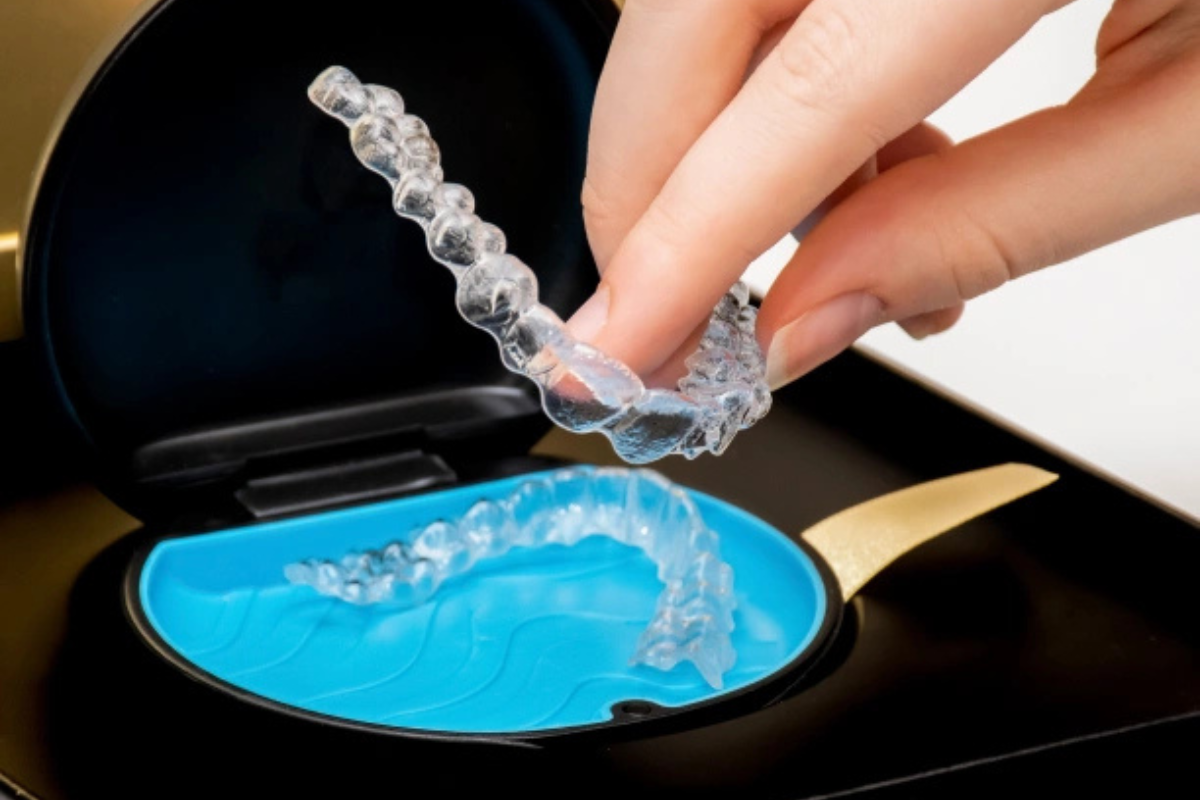
Preventing discoloration is usually easier than trying to remove heavy staining later. Make aligner care part of your everyday routine. Brush your teeth before putting your aligners back in whenever possible, particularly after meals. Rinse your trays regularly and store them in their case when they are not being worn. Keeping the case clean is also important because bacteria and residue can transfer back onto your aligners.
It is also helpful to limit exposure to staining beverages while wearing your trays. If you enjoy coffee or tea, remove your aligners first, follow your provider’s instructions, and clean your teeth before putting the trays back in. Good oral hygiene is an important part of Invisalign treatment. Clean teeth and clean aligners can help you maintain a healthier mouth while your teeth gradually move toward a straighter alignment.
When Should You Replace Yellow Invisalign Aligners?
Not every discolored aligner can be restored to its original appearance through cleaning. If your aligners remain yellow, cloudy, scratched, damaged, or difficult to clean despite following proper care instructions, contact your Invisalign provider. You should also contact your dentist if an aligner no longer fits properly, becomes cracked, or feels different from the way it normally fits. Do not try to reshape the tray yourself. Your dentist can determine whether the discoloration is simply surface buildup or whether the aligner needs to be replaced.
Keep Your Invisalign Treatment on Track
Yellow Invisalign aligners do not necessarily mean something is wrong with your treatment. In many cases, discoloration is related to buildup, staining foods and drinks, or inconsistent cleaning. A simple and consistent cleaning routine can help keep your trays clearer and more comfortable to wear.
If you are considering Invisalign or have questions about caring for your aligners during treatment, Aspire Dental can help you understand your options and develop a treatment plan based on your smile needs. Proper guidance can make it easier to maintain your aligners while working toward a straighter smile in Henderson. Schedule your appointment today!
Frequently Asked Questions
Can yellow Invisalign aligners become clear again?
Mild discoloration caused by surface buildup may improve with proper cleaning. However, deeper staining or discoloration that remains after cleaning may not completely disappear. Your dentist can determine whether the aligner should be replaced.
Why do my Invisalign aligners turn yellow so quickly?
Frequent exposure to coffee, tea, dark-colored beverages, food residue, plaque, and tobacco can contribute to faster discoloration. Inadequate cleaning can also allow buildup to accumulate on the trays.
Can I drink coffee while wearing Invisalign?
It is generally best to remove your aligners before drinking coffee because coffee can stain the trays. Follow your Invisalign provider’s specific instructions about what you can consume while wearing your aligners.
Can I clean Invisalign aligners with toothpaste?
It is better to avoid abrasive toothpaste because it can scratch the surface of clear aligners. Ask your dentist which cleaning method or product is appropriate for your specific trays.
How can I keep my Invisalign aligners clear?
Rinse your aligners regularly, clean them according to your provider’s instructions, maintain good oral hygiene, and remove them before eating or consuming beverages other than water. Keeping your aligner case clean can also help reduce buildup.
Should I see a dentist if my Invisalign aligners stay yellow?
Yes. If discoloration does not improve with proper cleaning, or if an aligner is damaged or no longer fits correctly, contact your Invisalign provider. They can determine whether cleaning, replacement, or another solution is appropriate.