
880 Seven Hills Drive, Suite 130, Henderson, NV 89052
Dental Implants for Front Teeth: Balancing Appearance and Function

Aspire Dental | October 22, 2026
Missing a front tooth can affect more than your smile. It may change the way you speak, make biting into certain foods difficult, and leave you feeling self-conscious in social situations. Dental implants offer a long-lasting way to replace missing front teeth by supporting a natural-looking replacement tooth while helping restore everyday oral function. For patients considering dental implant treatment in Henderson, the goal is to achieve a result that blends naturally with the surrounding teeth while providing stability and comfort.
Because front teeth are highly visible, their replacement requires careful attention to tooth shape, color, gum contours, and overall smile balance. Understanding the treatment process can help you make an informed decision about restoring your smile.
Why Replacing a Front Tooth Requires Special Attention
Front teeth play an important role in your appearance and daily activities. They help form certain speech sounds, guide the way you bite into food, and contribute to the overall shape of your smile. Unlike back teeth, which are less visible, front teeth are immediately noticeable when you talk or smile. Their replacement must match the surrounding teeth in several ways:
- Color and shade: The replacement tooth should blend with nearby teeth under different lighting conditions.
- Shape and size: Its proportions should complement the other teeth and your natural smile.
- Gum appearance: Healthy, balanced gum tissue helps create a natural transition between the implant crown and surrounding teeth.
- Position and alignment: Proper placement helps the replacement tooth fit comfortably and look consistent with the rest of your smile.
These details make careful planning an essential part of front tooth replacement.
How Dental Implants Restore Appearance and Function
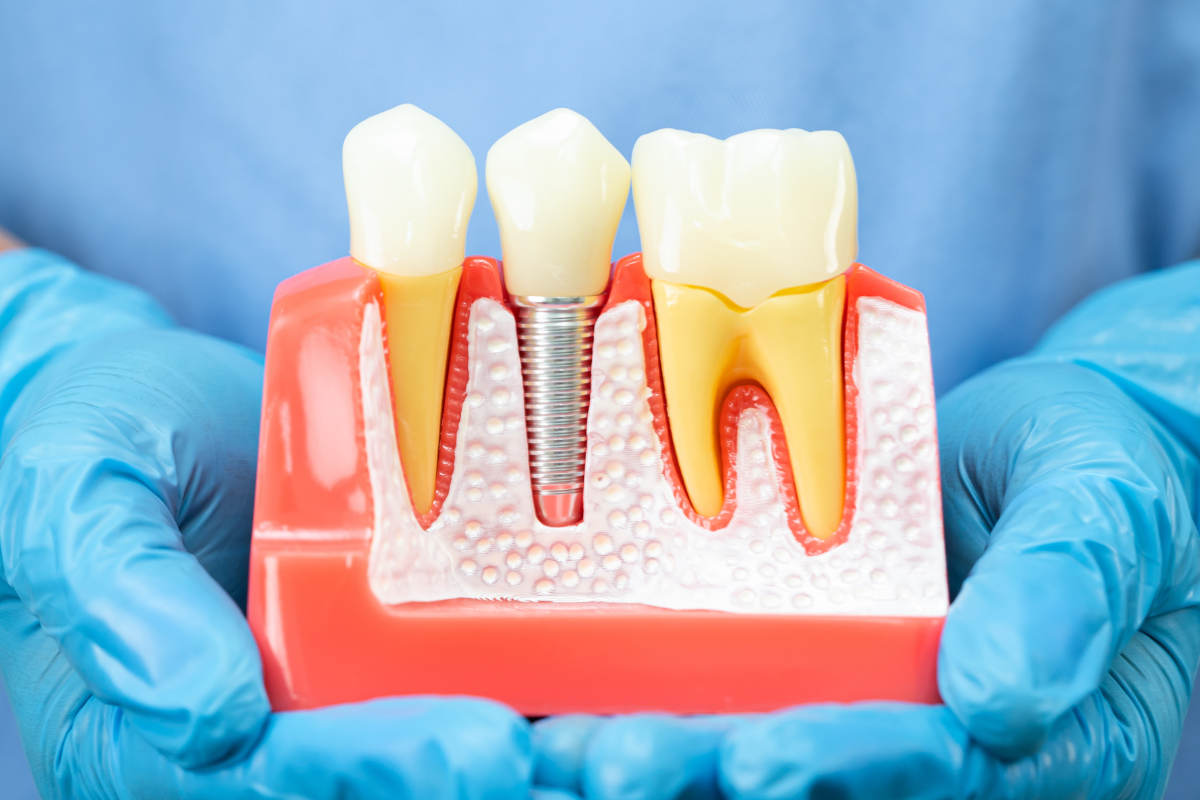
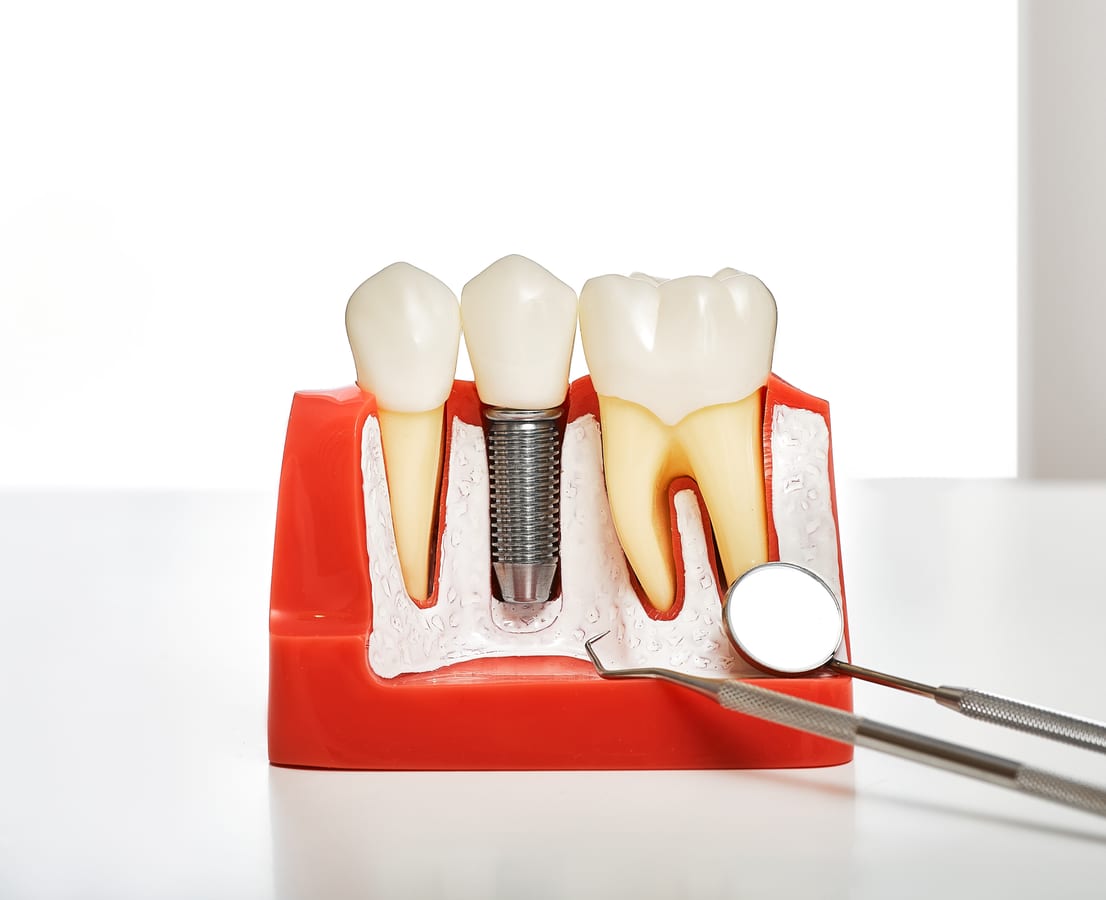
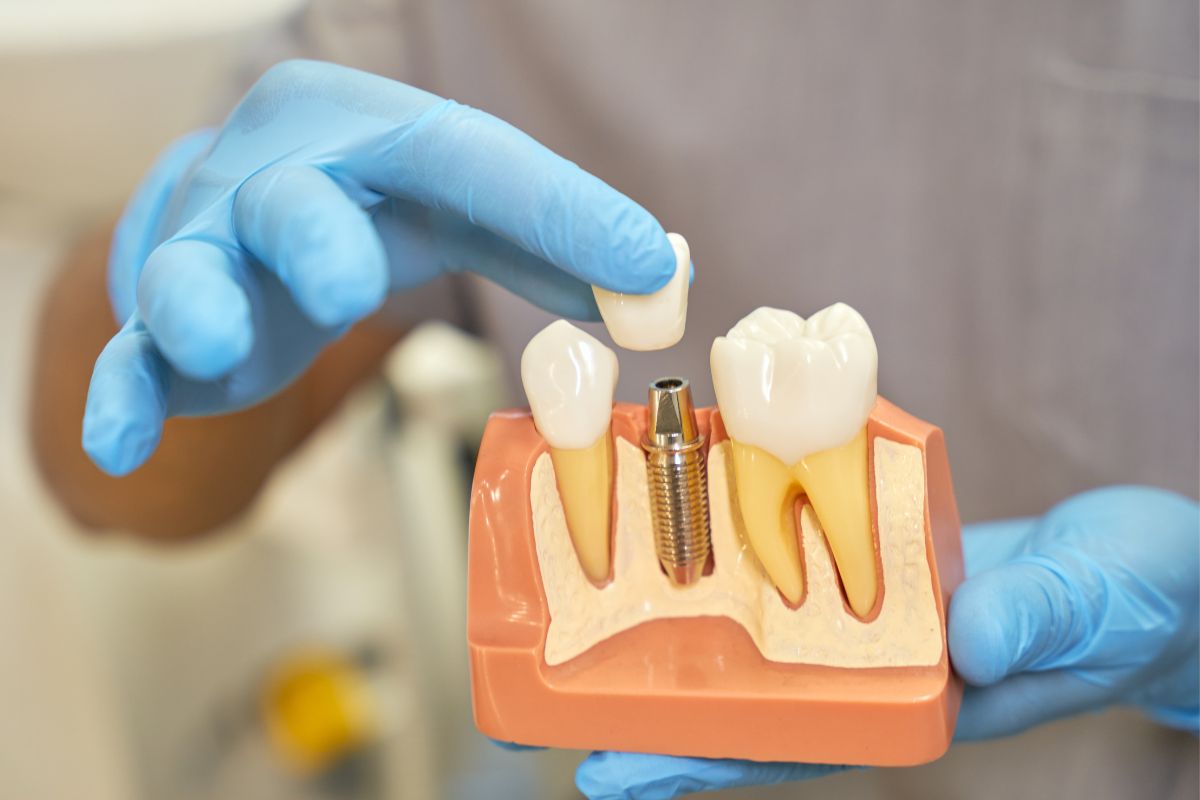
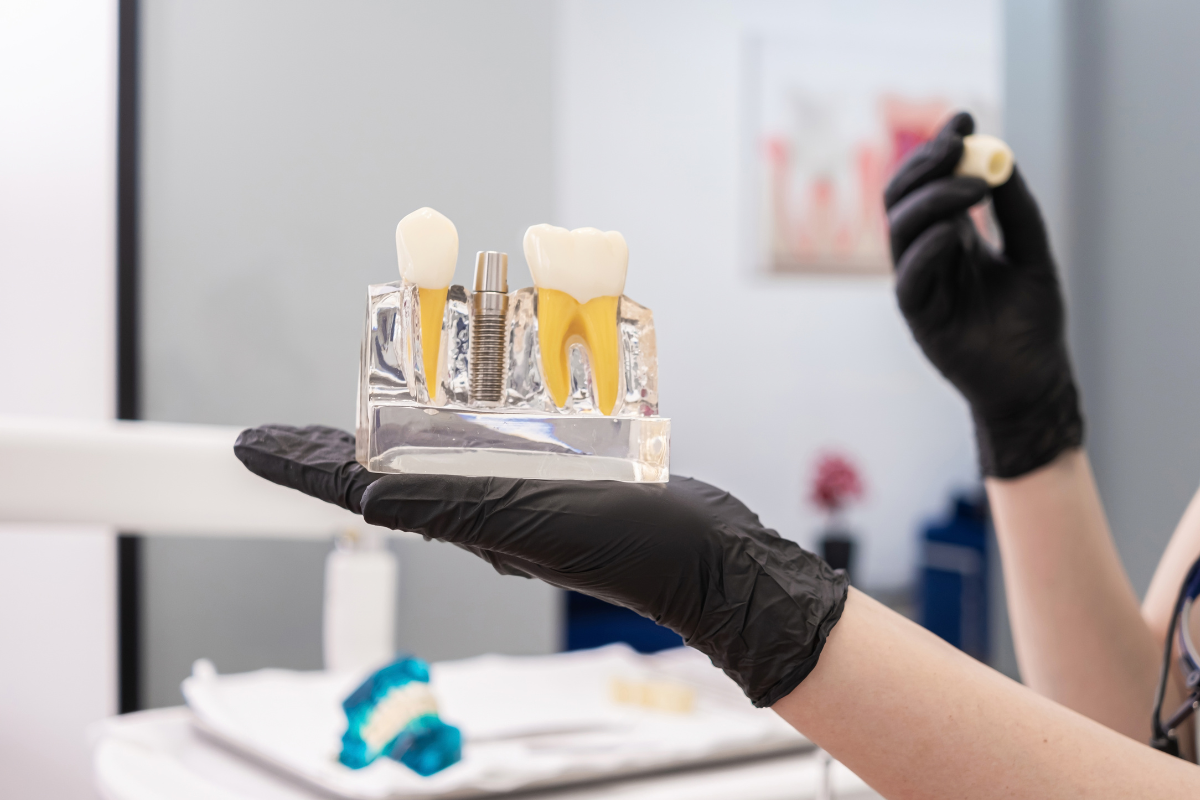
Dental implants replace missing teeth by using a small titanium or other biocompatible implant post placed in the jawbone. This post acts as an artificial tooth root. After it integrates with the surrounding bone, an abutment connects the implant to a custom-made crown. For a missing front tooth, the crown is designed to resemble a natural tooth in shape, color, and size. When planned and placed appropriately, the restoration can look like part of your original smile.
Implants also help preserve chewing function and stimulate the jawbone through forces transmitted during biting. When a tooth is missing, the bone in that area can gradually shrink because it no longer receives the same stimulation. Although dental implants offer several benefits, they require healthy surrounding tissues, adequate bone support, and consistent oral hygiene. They also do not develop cavities, but the gum tissue around them can become inflamed or infected without proper care.
What Happens During Front Tooth Implant Treatment?
The process typically involves several stages, although the exact timeline depends on your oral health and individual treatment needs.
1. Examination and Treatment Planning
Your dentist examines your teeth and gums and may take dental X-rays or three-dimensional scans to evaluate the available bone. The assessment helps determine whether an implant is suitable and whether additional procedures, such as bone grafting, may be needed.
2. Implant Placement
The implant post is placed in the jawbone during a surgical procedure. Depending on the condition of the extraction site and surrounding tissues, an implant may sometimes be placed immediately after a tooth is removed. However, this is not appropriate for every patient.
3. Healing and Temporary Tooth Options
The implant needs time to integrate with the jawbone. During healing, a temporary tooth may be used to maintain the appearance of your smile. Your dentist will explain whether this option is appropriate and what restrictions may be necessary.
4. Custom Crown Placement
Once the implant is sufficiently stable, a permanent crown is attached. Its color, shape, and fit are carefully assessed to help it blend with neighboring teeth and function comfortably.
Are You a Candidate for Front Tooth Dental Implants?
Many adults with missing front teeth can be candidates for implant treatment. However, several factors influence the decision, including jawbone volume, gum health, overall health, and habits such as smoking. Patients with gum disease may need treatment before implant placement. Similarly, insufficient bone may require grafting to create adequate support. Your dentist will also review medications and health conditions that could affect healing.
If you are exploring implant dentistry in Henderson, a comprehensive evaluation can help identify the most appropriate option for your situation. Depending on your needs, alternatives such as a dental bridge or removable partial denture may also be worth discussing.
How to Care for Your New Implant Crown
Maintaining your implant is essential for protecting the surrounding gums and supporting its long-term success.
Follow these practical steps:
- Brush twice daily with a soft-bristled toothbrush.
- Clean between your teeth and around the implant using floss or other recommended cleaning aids.
- Attend regular dental checkups and professional cleanings.
- Avoid using your front teeth to bite hard objects, such as ice or pens.
- Contact your dentist if you notice bleeding gums, swelling, discomfort, or movement in the restoration.
With proper care and regular monitoring, an implant can serve as a durable replacement for a missing tooth. However, its lifespan depends on individual oral health, maintenance, and other contributing factors.
Conclusion
Replacing a front tooth involves more than filling a gap. The best outcome balances a natural appearance with comfortable function, healthy gum tissue, and stable support. Dental implants can provide an effective long-term solution for suitable candidates, but careful planning and ongoing maintenance are essential. Understanding your bone health, treatment options, healing timeline, and long-term care needs can help you decide which replacement option fits your circumstances.
If you have a missing front tooth or are considering a replacement, schedule an appointment with Aspire Dental in Henderson. A dental evaluation can help you understand your options and determine whether implant treatment is appropriate for your smile.
FAQs
1. Do dental implants for front teeth look natural?
Yes, a front tooth implant can look very natural when the crown is carefully matched to the color, shape, and size of the surrounding teeth. Proper implant placement and healthy gum tissue also contribute to a balanced smile.
2. How long does it take to get a front tooth implant?
The process can take several months, depending on healing, bone health, and whether additional procedures are needed. Some patients may qualify for immediate implant placement or a temporary tooth while the implant heals.
3. Is getting a front tooth implant painful?
The procedure is generally performed with local anesthesia to minimize discomfort. Mild soreness, swelling, or tenderness may occur afterward and usually improves during recovery. Your dentist will provide instructions for managing these symptoms.
4. Can I get a dental implant immediately after losing a front tooth?
In some cases, an implant can be placed immediately after tooth extraction. However, this depends on the condition of the bone, gum tissue, and extraction site, as well as the presence of infection. Your dentist will determine the appropriate timing.
5. What happens if I do not replace a missing front tooth?
Leaving a missing front tooth unreplaced may affect your smile, speech, and ability to bite comfortably. Neighboring teeth can also shift over time, and bone loss may occur in the area where the tooth is missing.